🏛️ AntikPara
- 🏠 Ana Sayfa
- 🌐 Müzayede Arama
- 💰 Fiyatlar & Üyelik
- KATEGORİLER
- 🏛️ Antik Sikkeler
- 🗽 Amerika Sikkeleri
- 🌍 Dünya Sikkeleri
- ✨ Modern Darphaneler
- METALLER
- 🥇 Altın
- 🥈 Gümüş
- 🥉 Bronz
- HIZLI ARAMALAR
- → Roman Denarius
- → Greek Tetradrachm
- → Byzantine Gold
- → Ottoman
- KURUMSAL
- 🔒 Gizlilik Politikası
- 📋 Kullanım Şartları
- 📜 KVKK Bilgilendirmesi
- 📧 İletişim
- 💡 Tavsiye Gönder
🌐 DİL SEÇİMİ
🔍 "indo greek" Arama Sonuçları
31915 sonuç bulundu
🏛️ Müzayede
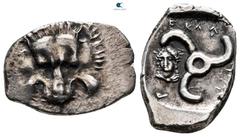
Greek Dynasts of Lycia. Perikles 380-360 BC. 1/3 Stater AR 17 mm, 3,12 g Facing lion scalp / Triskeles; to left, laureate and draped bust of Apollo (?) facing slightly to left; all within incuse squar
🏛️ Savoca Numismatik , 113th Silver Au...
📅 19.09.2021
📄 Detayları Gör
🏛️ Müzayede
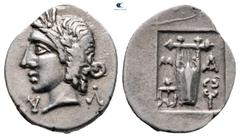
Greek Lycia. Masikytes circa 30-20 BC. Hemidrachm AR 15 mm, 1,56 g Λ-Υ, laureate head of Apollo left / M-A, lyre; trident to left; kerykeion to right. very fine Troxell 54.
🏛️ Savoca Numismatik , 113th Silver Au...
📅 19.09.2021
📄 Detayları Gör
🏛️ Müzayede
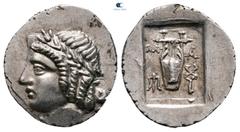
Greek Lycia. Masikytes circa 30-20 BC. Hemidrachm AR 16 mm, 1,81 g Λ-Υ, laureate head of Apollo left / M-A, lyre; trident to left; kerykeion to right. extremely fine Troxell 54.
🏛️ Savoca Numismatik , 113th Silver Au...
📅 19.09.2021
📄 Detayları Gör
🏛️ Müzayede
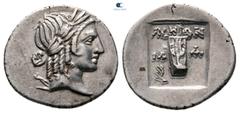
Greek Lycia. Masikytes circa 40-20 BC. Hemidrachm AR 14 mm, 1,65 g Head of Apollo right, wearing tainia / Kithara; ΛYKIΩN above, M-A across field, aphlaston to lower right; all within incuse square. g
🏛️ Savoca Numismatik , 113th Silver Au...
📅 19.09.2021
📄 Detayları Gör
🏛️ Müzayede
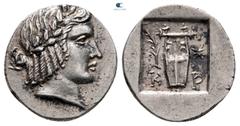
Greek Lycia. Kragos circa 30-20 BC. Hemidrachm AR 14 mm, 1,45 g Laureate head of Apollo right / K-P, lyre; palm branch to left; star to right. extremely fine SNG von Aulock 4303 var.
🏛️ Savoca Numismatik , 113th Silver Au...
📅 19.09.2021
📄 Detayları Gör
🏛️ Müzayede
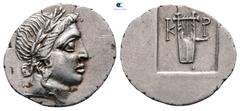
Greek Lycia. Kragos circa 48-42 BC. Hemidrachm AR 16 mm, 1,90 g Laureate head of Apollo right / Lyre; K P across fields; all within rectangular incuse. extremely fine RPC I 3301; SNG Copenhagen 59-60.
🏛️ Savoca Numismatik , 113th Silver Au...
📅 19.09.2021
📄 Detayları Gör
🏛️ Müzayede
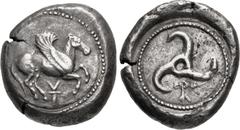
Greek DYNASTS of LYCIA. Khinakha. Circa 440/30-400 BC. AR Stater (18.5mm, 9.84 g). Pegasos flying right; ì below; all on raised disc / Large triskeles; conjoined ᛉ and diskeles in one section; all in
🏛️ Classical Numismatic Group, Auction...
📅 13.09.2021
📄 Detayları Gör
🏛️ Müzayede
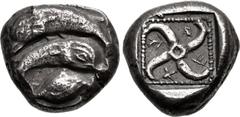
Greek DYNASTS of LYCIA. Thibãnuwa. Circa 480-460 BC. AR Stater (18.5mm, 9.79 g). Aperlai (Apollonia) or Phellos mint. Two dolphins leaping, left and right, respectively; human eye below / Tetraskeles,
🏛️ Classical Numismatic Group, Auction...
📅 13.09.2021
📄 Detayları Gör
🏛️ Müzayede
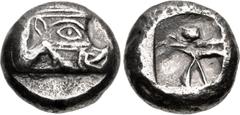
Greek LYCIA, Phaselis. Circa 530-500 BC. AR Stater (19mm, 10.86 g). Prow of galley right, terminating in a boar's forepart / Incuse square bisected with two parallel lines; one half further divided by
🏛️ Classical Numismatic Group, Auction...
📅 13.09.2021
📄 Detayları Gör
🏛️ Müzayede
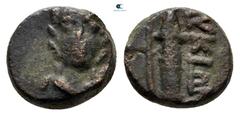
Greek Lycia. Uncertain mint circa 100-0 BC. Bronze Æ 9 mm, 0,99 g nearly very fine
🏛️ Savoca Numismatik , 112th Blue Auct...
📅 11.09.2021
📄 Detayları Gör
🏛️ Müzayede
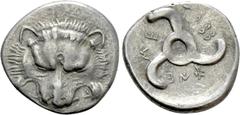
Greek Coins DYNASTS OF LYCIA. Trbbenimi (Circa 390-370 BC). Tetrobol. Uncertain mint. Obv: Facing scalp of lion. Rev: Triskeles within incuse circle. Müseler VIII.25-7; SNG von Aulock 4215. Condition:
🏛️ Numismatik Naumann (formerly Gitbud...
📅 05.09.2021
📄 Detayları Gör
🏛️ Müzayede
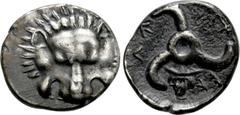
Greek Coins DYNASTS OF LYCIA. Perikles (Circa 380-360 BC). Tetrobol. Obv: Facing lion’s scalp. Rev: Triskeles; facing head of Hermes in lower field. Müseler VIII, 38. Condition: Very fine. Weight: 2.9
🏛️ Numismatik Naumann (formerly Gitbud...
📅 05.09.2021
📄 Detayları Gör
🏛️ Müzayede
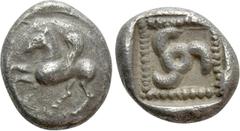
Greek Coins DYNASTS OF LYCIA. Khinakha (Circa 470-440 BC). 1/3 Stater. Uncertain mint, possibly Limyra. Obv: Pegasos rearing left. Rev: Triskeles in dotted square within incuse square. Cf. Müseler IV,
🏛️ Numismatik Naumann (formerly Gitbud...
📅 05.09.2021
📄 Detayları Gör
🏛️ Müzayede
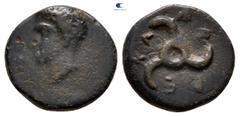
Greek Dynasts of Lycia. Uncertain mint. Perikles 380-360 BC. Bronze Æ 13 mm, 1,72 g very fine
🏛️ Savoca Numismatik , 111th Blue Auct...
📅 28.08.2021
📄 Detayları Gör
🏛️ Müzayede
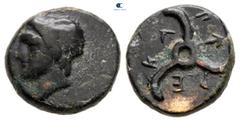
Greek Dynasts of Lycia. Perikles circa 380-360 BC. Bronze Æ 13 mm, 2,11 g very fine
🏛️ Savoca Numismatik , 111th Blue Auct...
📅 28.08.2021
📄 Detayları Gör
🏛️ Müzayede
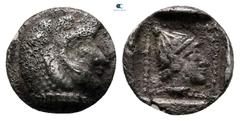
Greek Lycia. Uncertain mint circa 500-400 BC. Obol AR 9 mm, 0,77 g very fine
🏛️ Savoca Numismatik , 111th Blue Auct...
📅 28.08.2021
📄 Detayları Gör
🏛️ Müzayede
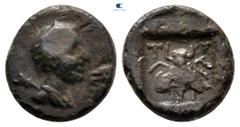
Greek Lycia. Telmessos circa 200-0 BC. Bronze Æ 12 mm, 1,35 g very fine
🏛️ Savoca Numismatik , 111th Blue Auct...
📅 28.08.2021
📄 Detayları Gör
🏛️ Müzayede
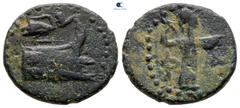
Greek Lycia. Phaselis circa 190-167 BC. Bronze Æ 19 mm, 4,13 g very fine
🏛️ Savoca Numismatik , 111th Blue Auct...
📅 28.08.2021
📄 Detayları Gör
🏛️ Müzayede
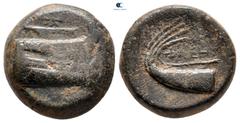
Greek Lycia. Phaselis circa 250-220 BC. Bronze Æ 16 mm, 6,26 g very fine
🏛️ Savoca Numismatik , 111th Blue Auct...
📅 28.08.2021
📄 Detayları Gör
🏛️ Müzayede
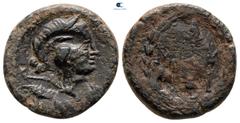
Greek Lycia. Masikytes circa 100-50 BC. Bronze Æ 19 mm, 3,71 g nearly very fine
🏛️ Savoca Numismatik , 111th Blue Auct...
📅 28.08.2021
📄 Detayları Gör


